Branding Belonging Through Participation
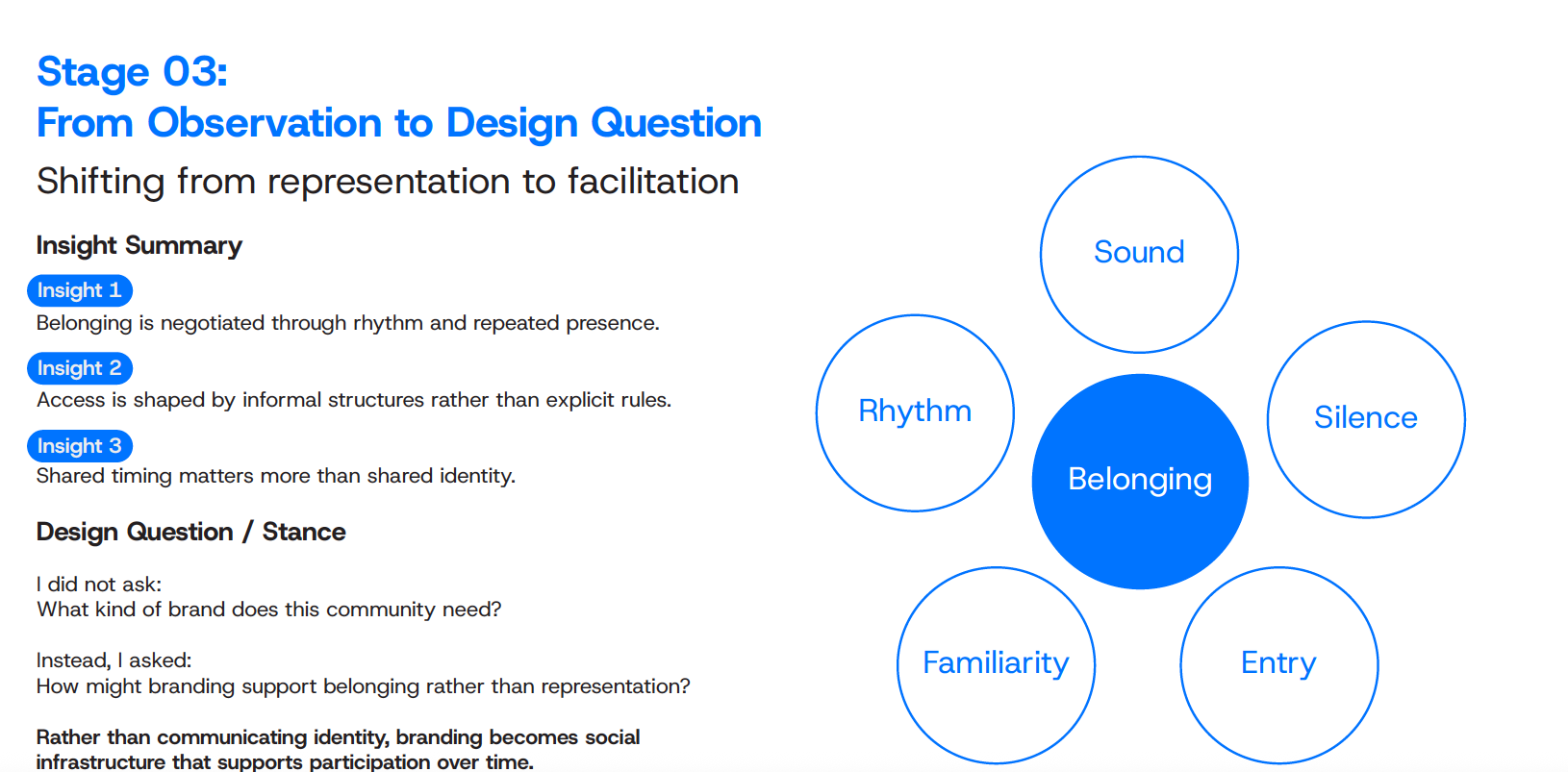
Re:Match is a community-based branding experiment that explores how branding can function as a form of social infrastructure, supporting belonging through participation rather than representation.
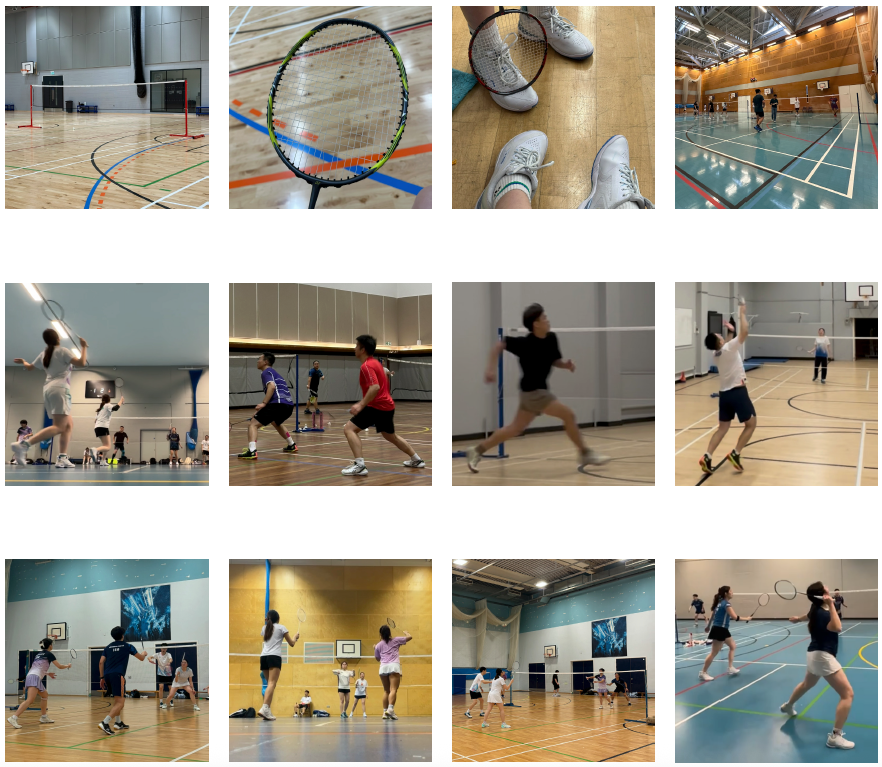
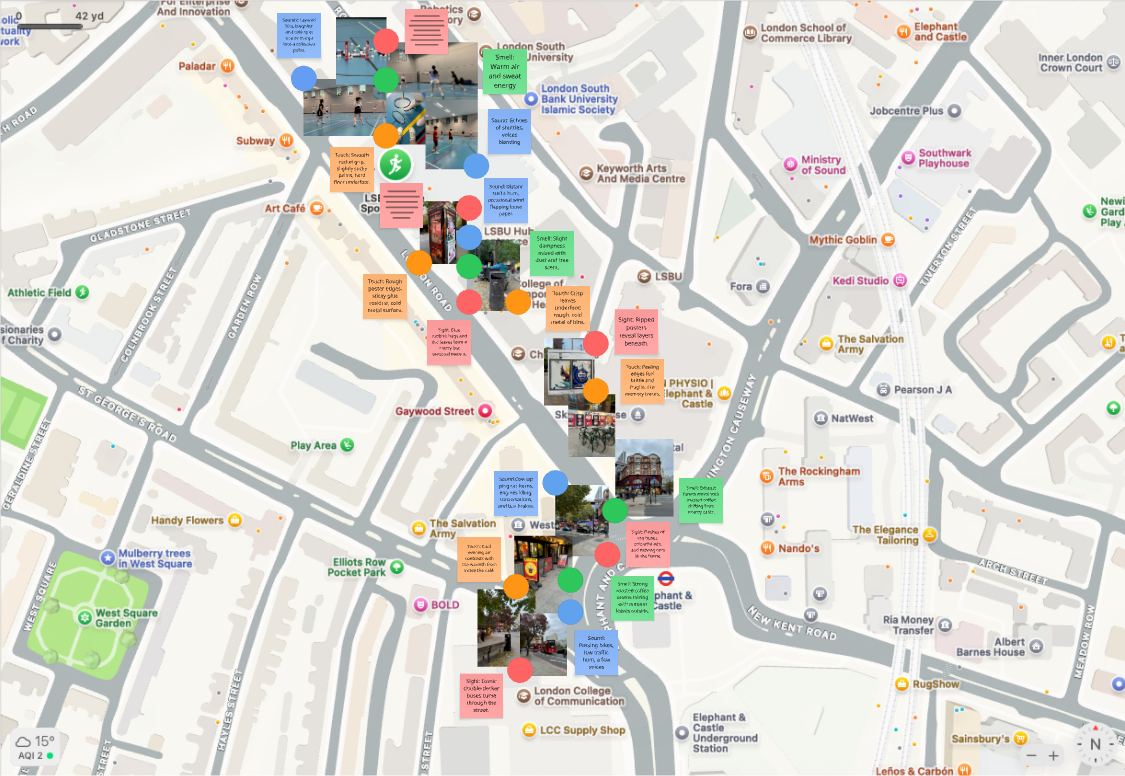
The project emerged from on-site observation and active participation within a London badminton community. Rather than seeing belonging as something people have, the research revealed it as something continuously produced through repetition, shared rules, embodied presence, and everyday interactions. Re:Match responds to these dynamics by proposing an open branding system composed of participatory visuals, physical touchpoints, and collective rituals that allow relationships to be negotiated in use.
In this rotation, branding is not treated as a fixed identity or a final output, but as an evolving structure shaped by people over time. Re:Match marks a key shift in my practice — from designing for audiences to designing with people.
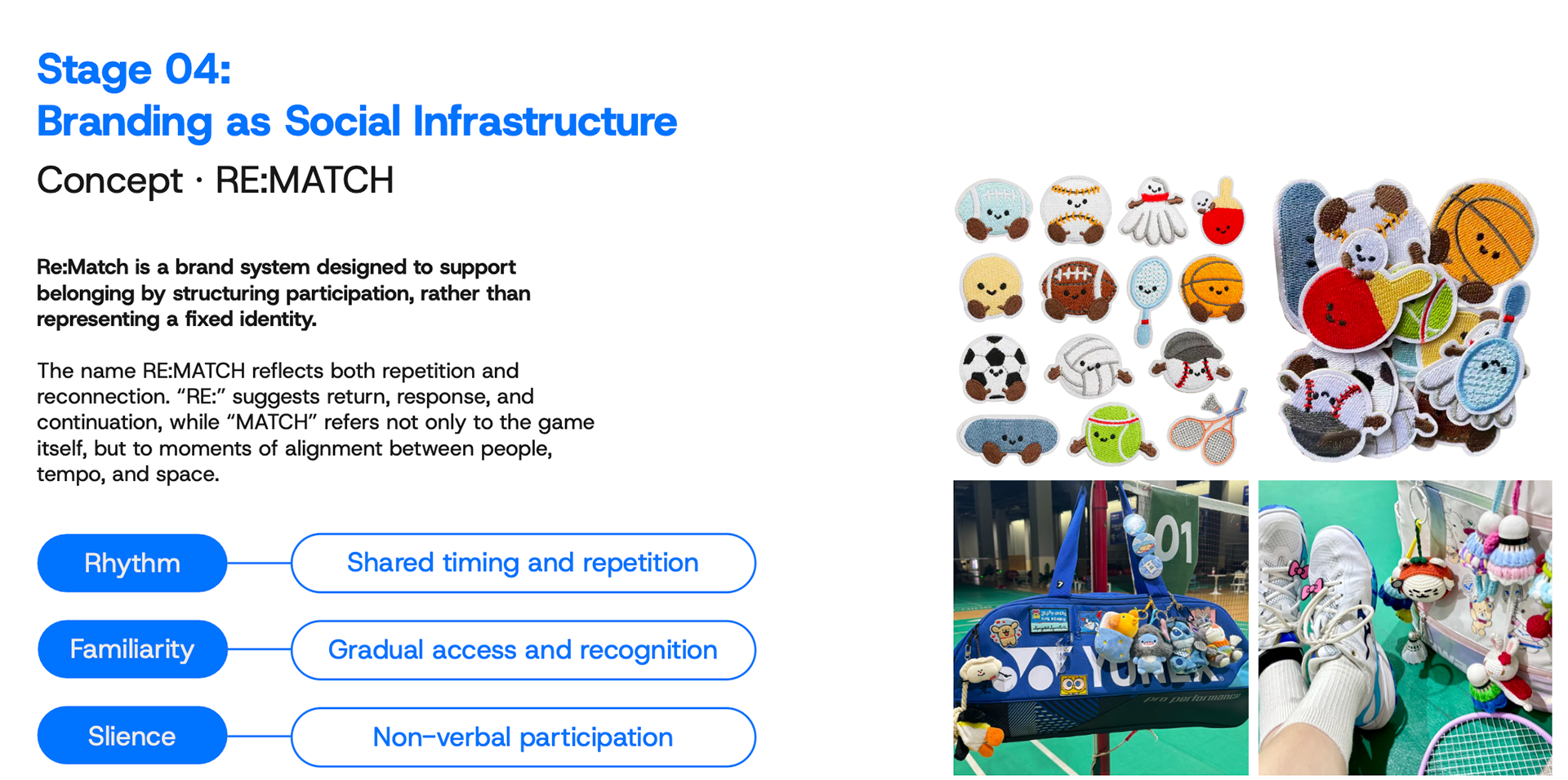
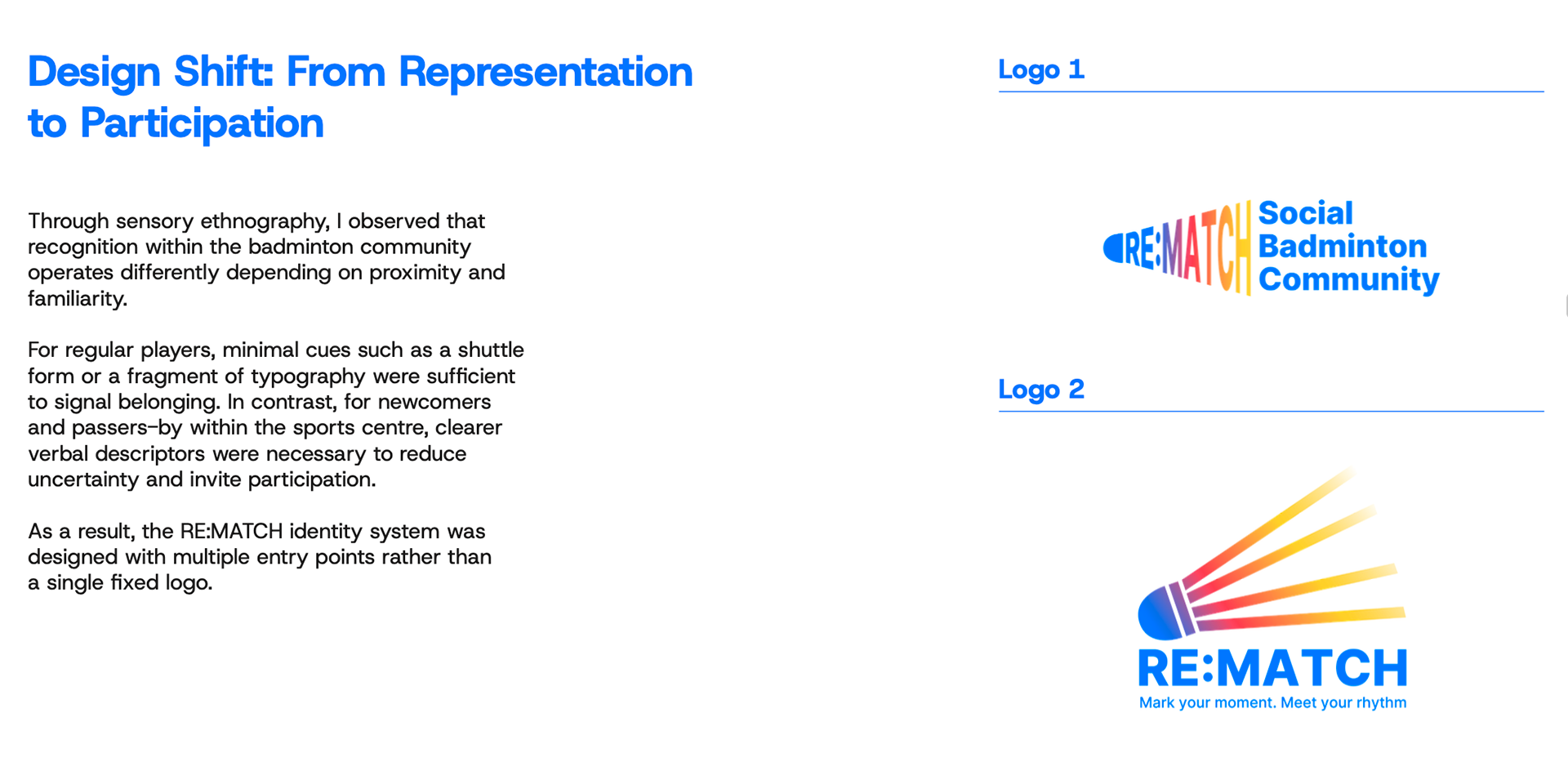
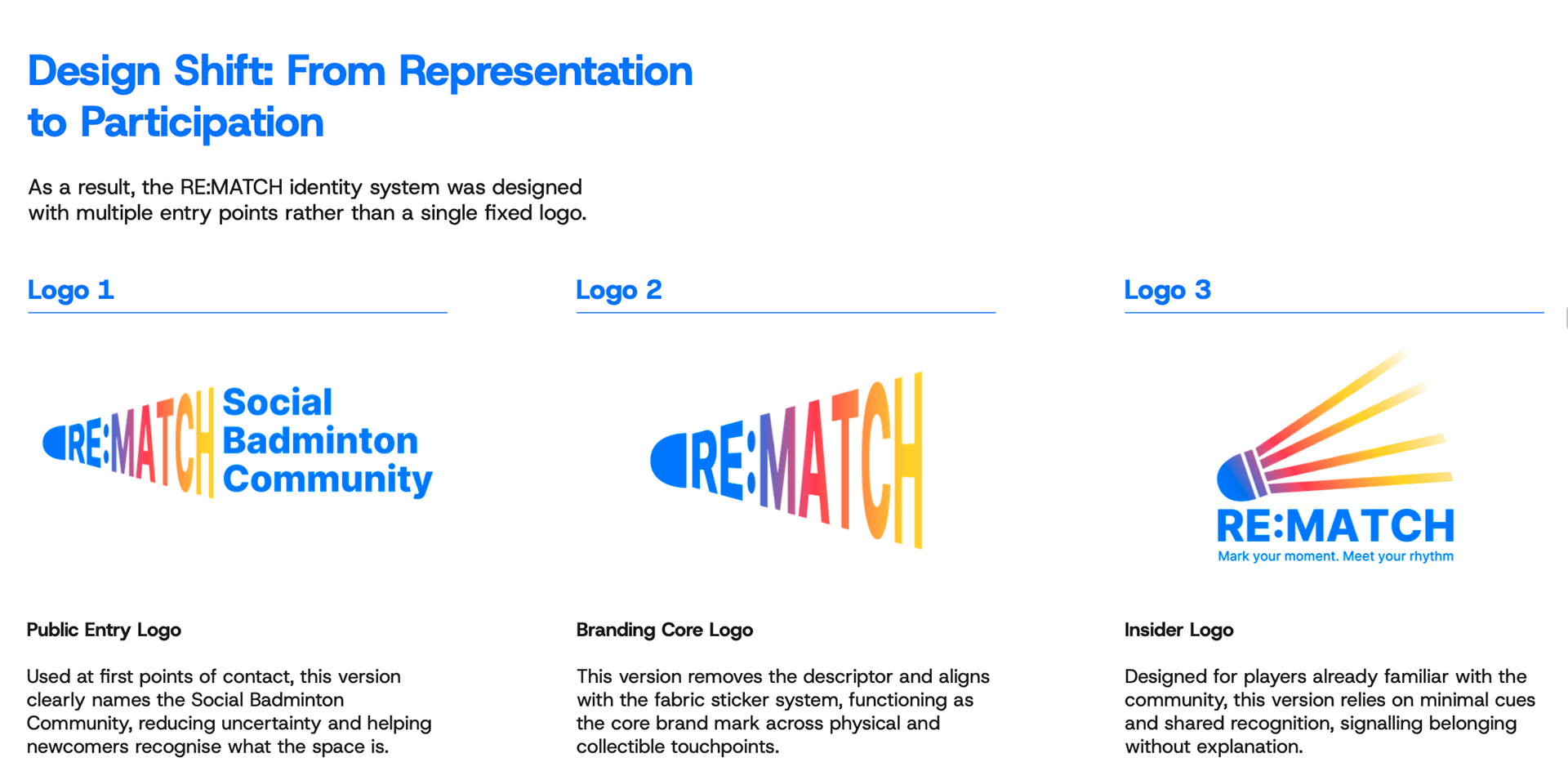
RE:MATCH is a human-centred brand system emerging from a transient badminton community at LSBU Sports Hall.
Rather than branding a sports activity, the project explores how branding can make invisible social connections visible, memorable, and shareable.
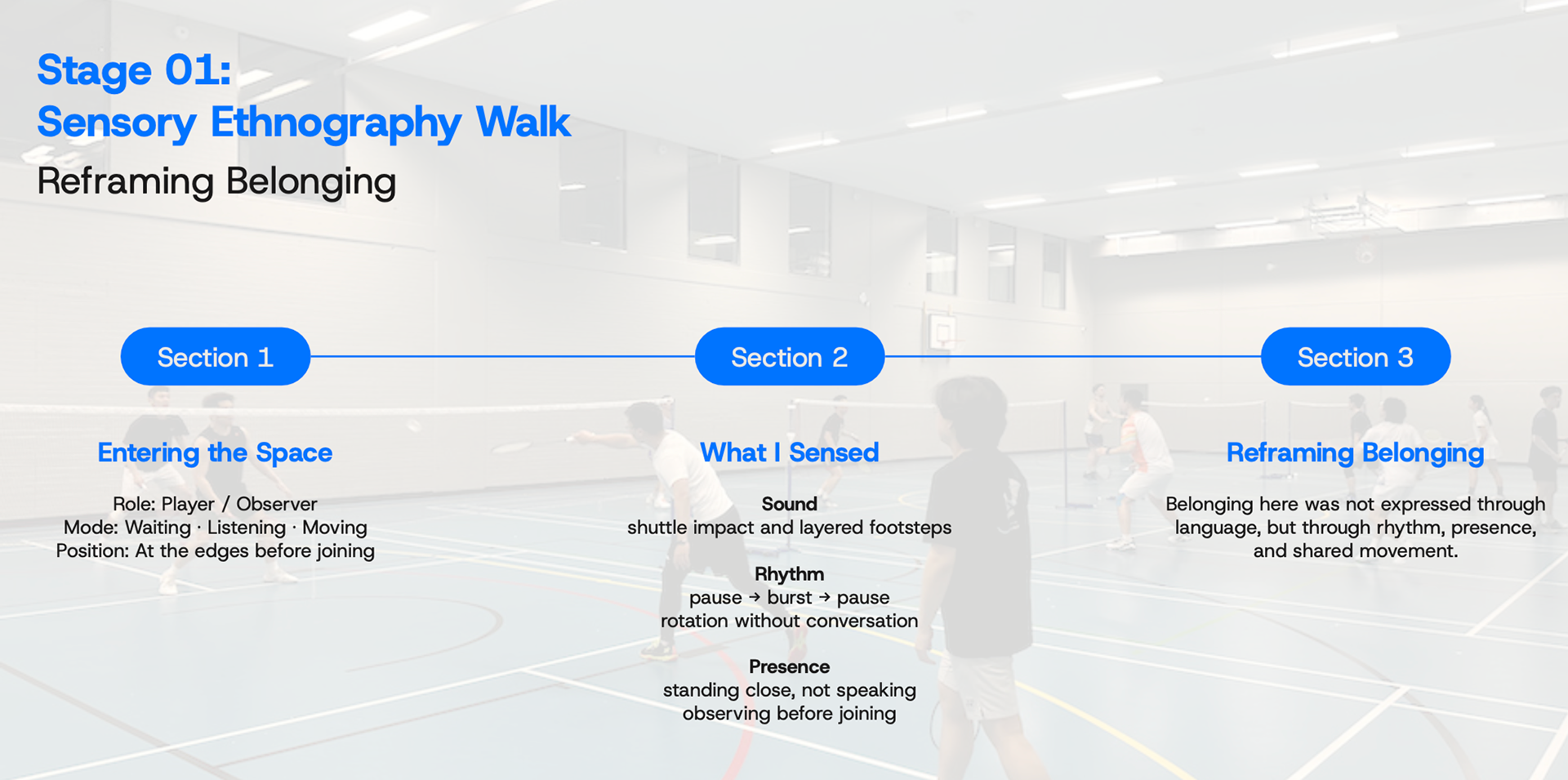
Rooted in sensory ethnography and community observation, RE:MATCH treats branding not as a message delivered to an audience, but as a structure that supports reconnection through shared rhythm and play.
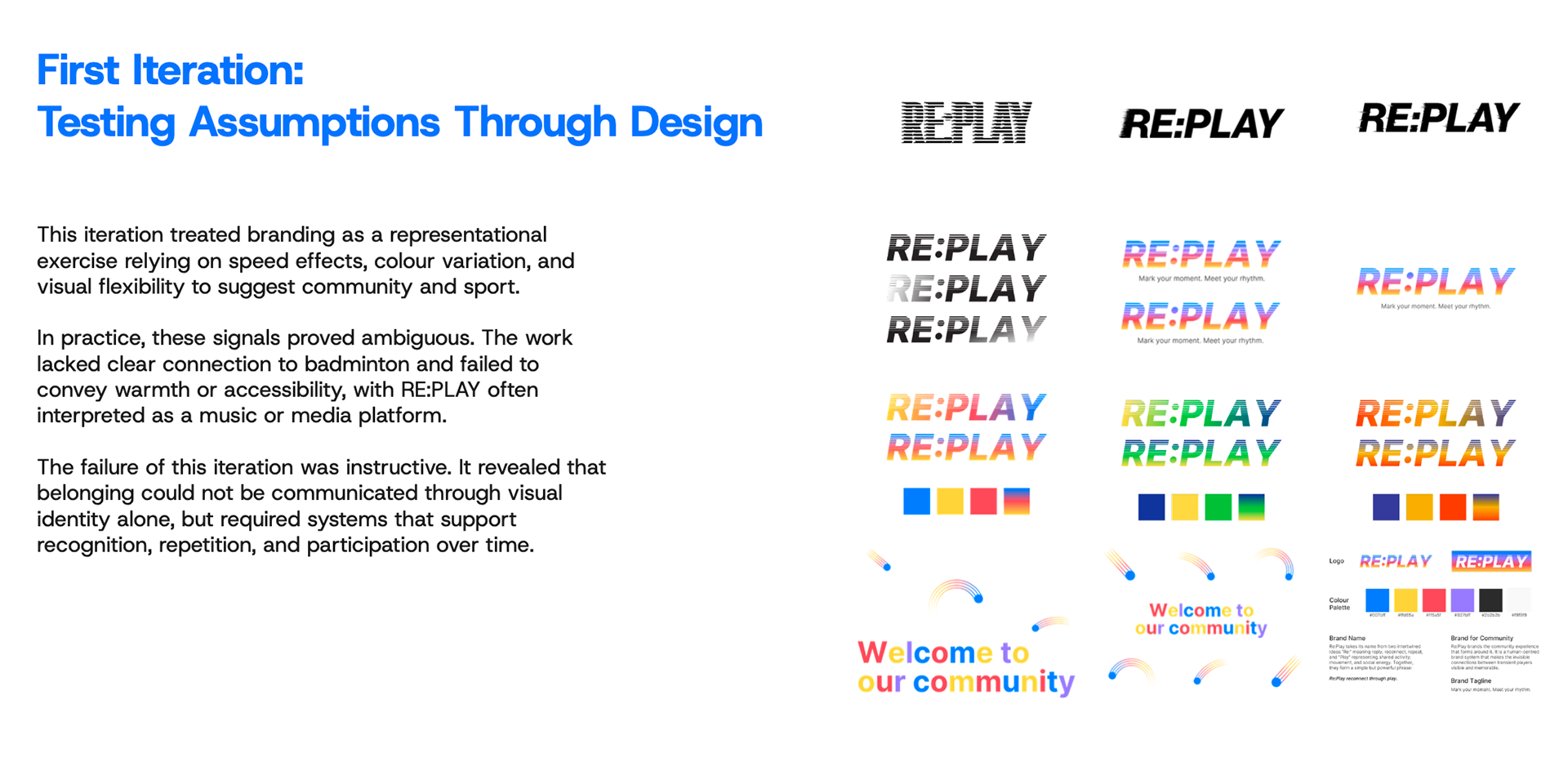
I was never designing a sports brand, but a community experience shaped by rhythm, movement, and participation. The project later evolved from an earlier concept, Re:Play, as feedback reshaped my understanding of participation.
Stage 02: Community Mapping
Mapping relationships, power, and access.
Key Relational Structures
1. Core players vs. peripheral participants
Familiarity and repetition grant regular players informal authority, positioning them as gatekeepers of entry, waiting, and pace.
2. Silent new players
New Players often observe rather than speak, negotiating belonging through timing, movement, and imitation instead of verbal invitation.
3. Invisible rule-makersRules are rarely stated but continuously performed. Authority emerges through unspoken norms of rotation, duration, and initiation.
People were not users, but participants negotiating space, rules, and recognition.
Touchpoint 1
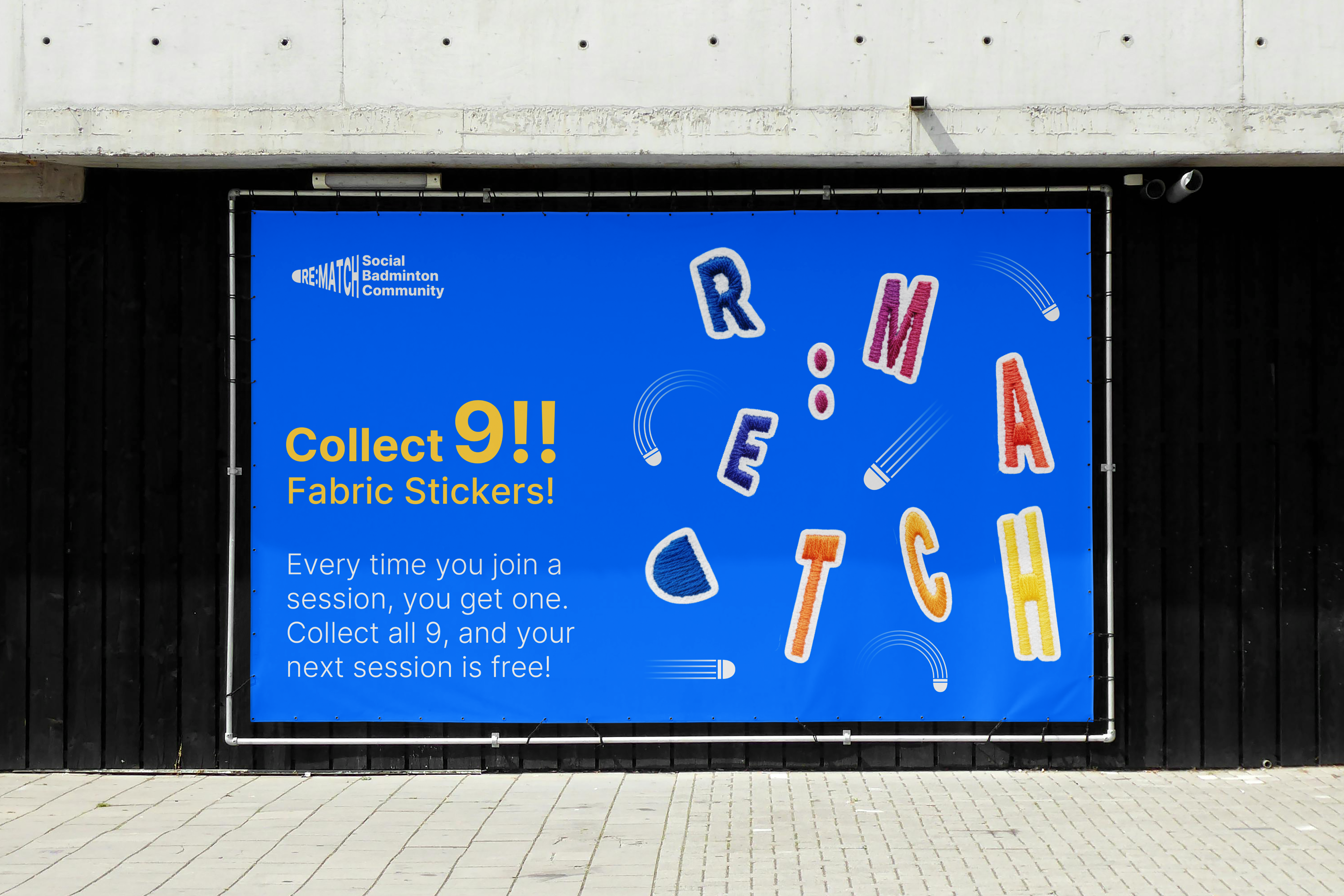
Community Banner
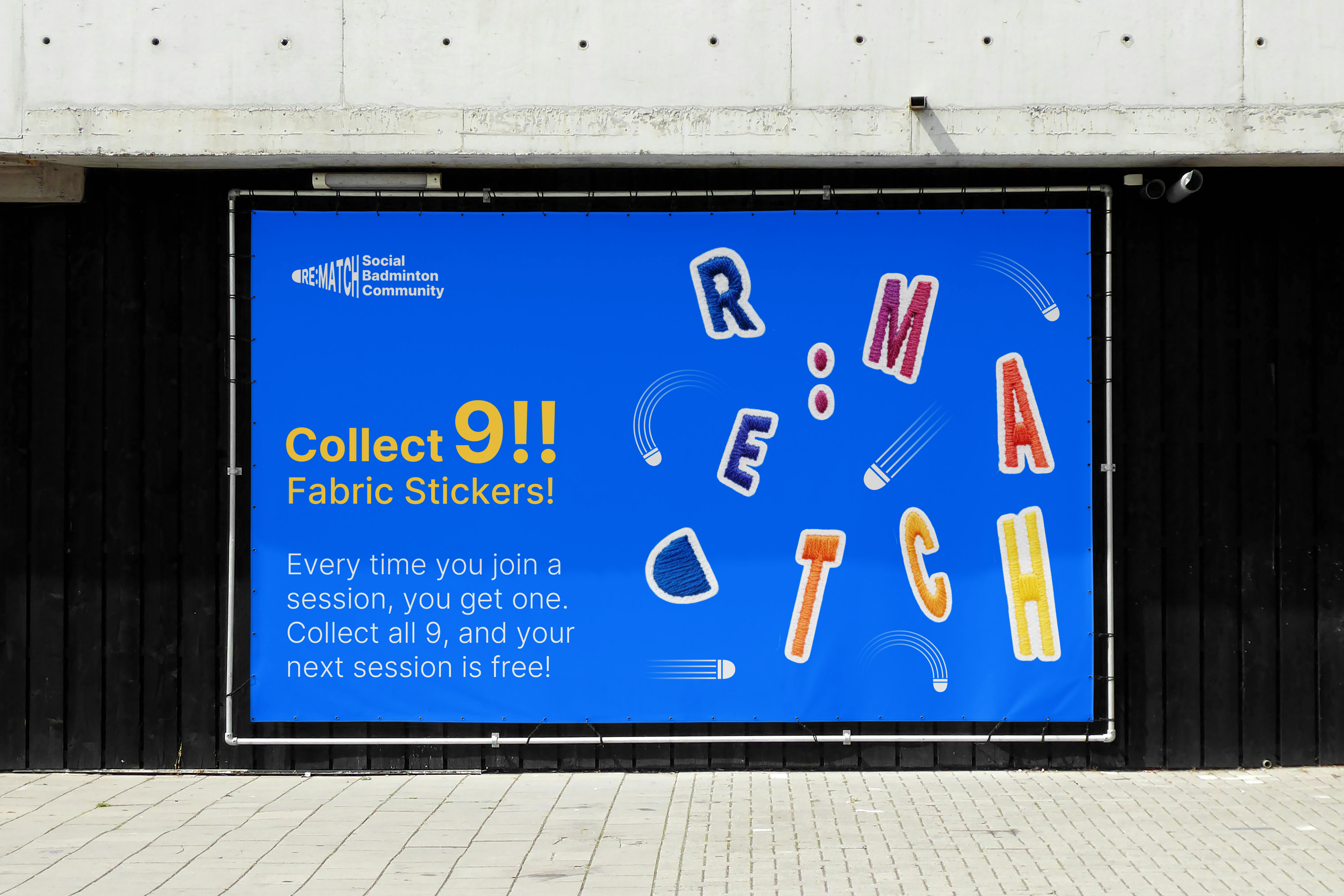
Installed outside the sports centre, the community banner acts as a threshold into RE:MATCH.
It introduces the sticker collection as a shared system of participation, helping new players understand how belonging can be built quickly through repeated presence.
Touchpoint 2
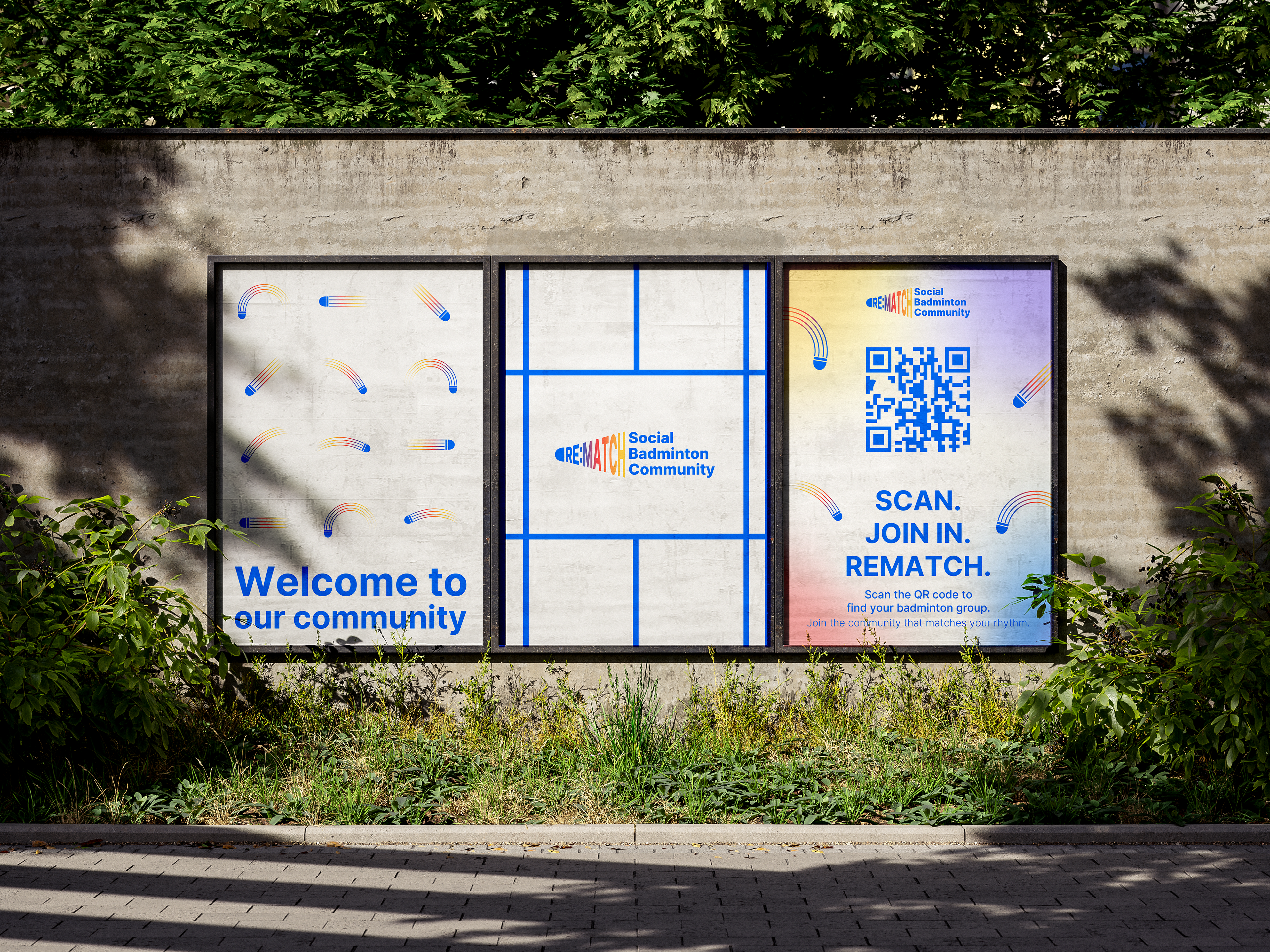
Community Poster
The community poster extends the system into shared public space.
Using motion-based illustrations and minimal instruction, it welcomes new players and reinforces the idea that belonging begins before formal introduction or conversation.
Touchpoint 3
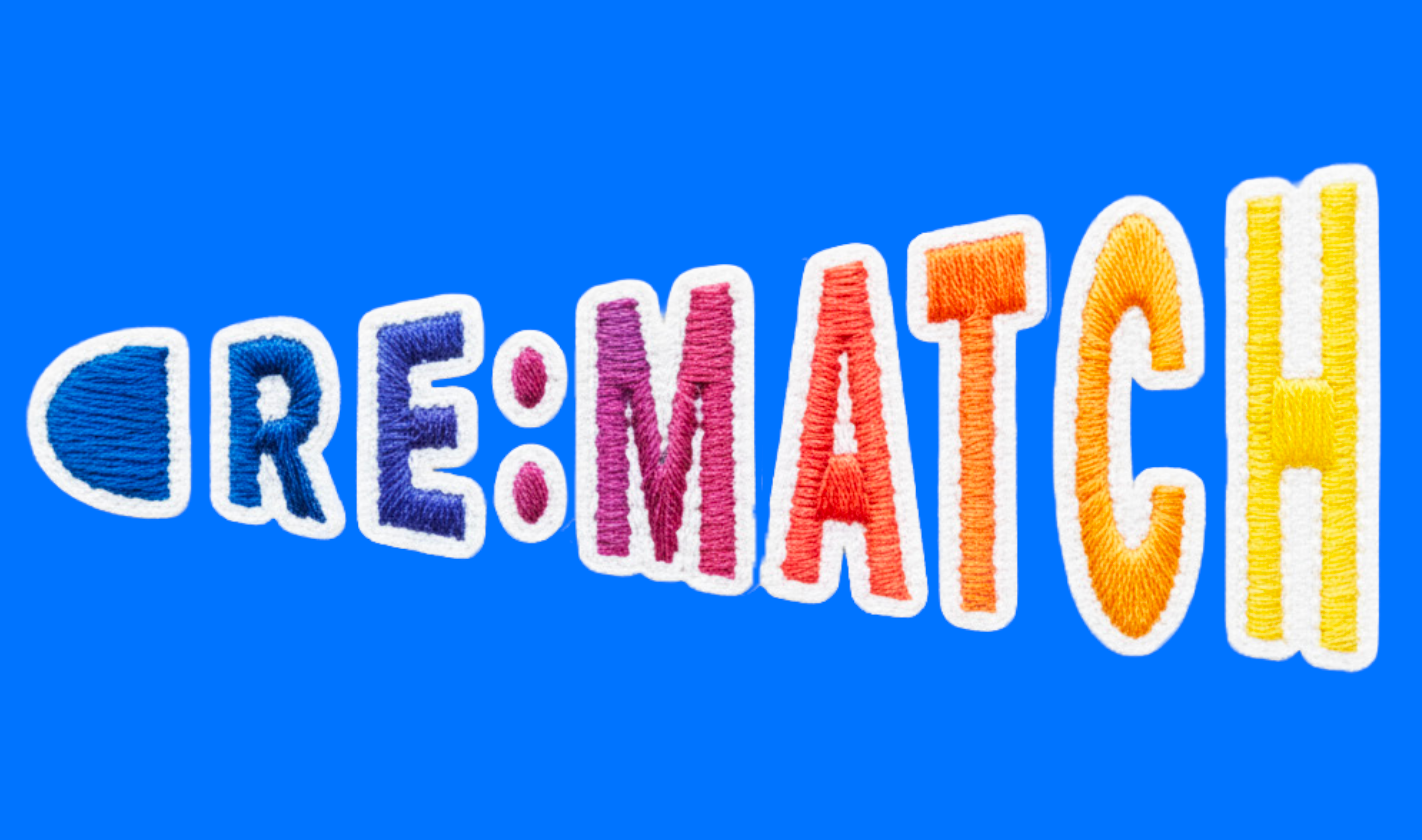
Fabric Sticker Collections
The fabric sticker collection translates participation into a tangible, collectible form.
Each sticker marks a session attended, allowing belonging to be built gradually through repetition rather than skill, competition, or visibility.
Touchpoint 4
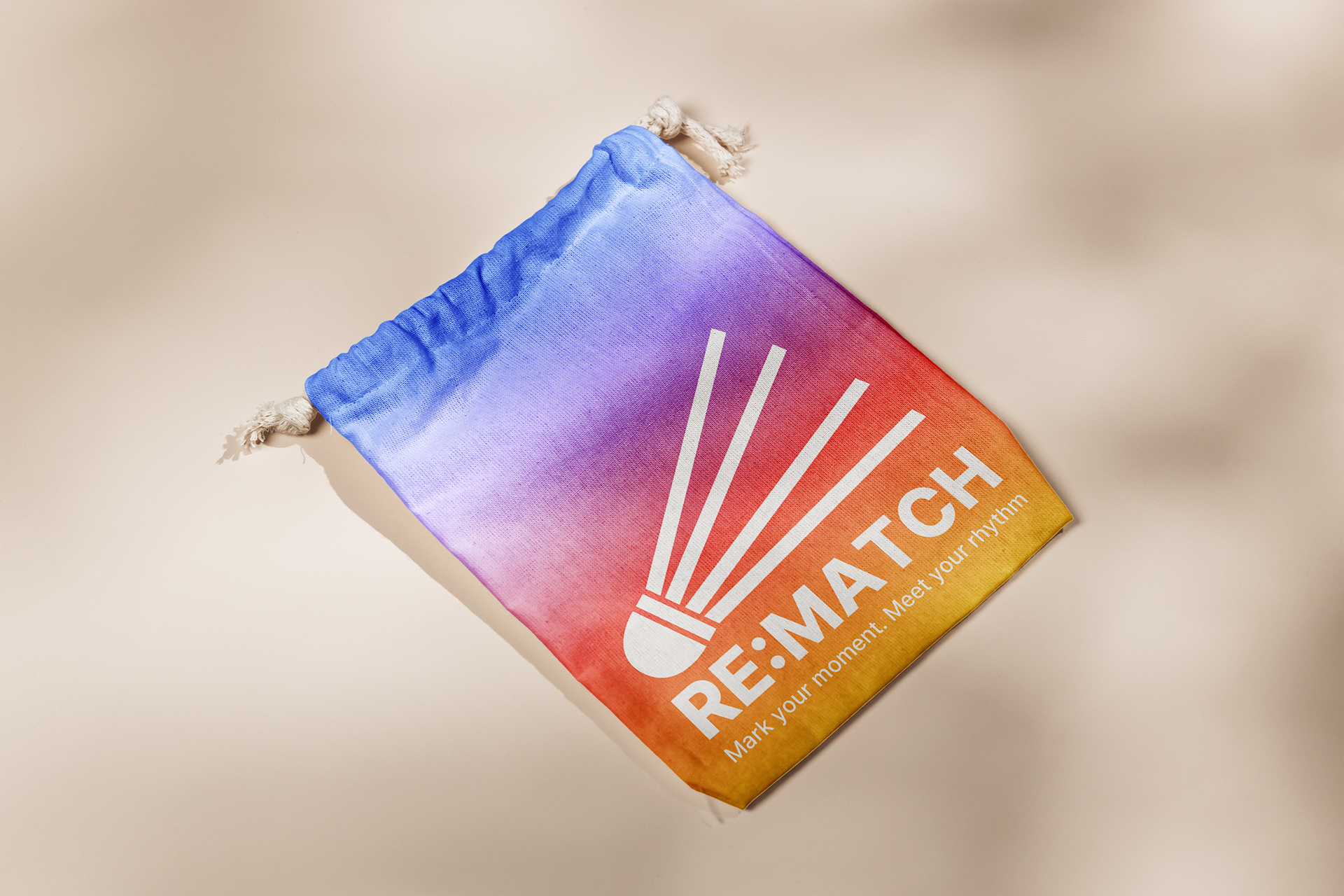
Collection Bag
The collection bag provides a personal space for storing and carrying accumulated stickers.
As a portable touchpoint, it allows participation to move with the player, turning private ownership into a quiet signal of ongoing involvement.
Touchpoint 5
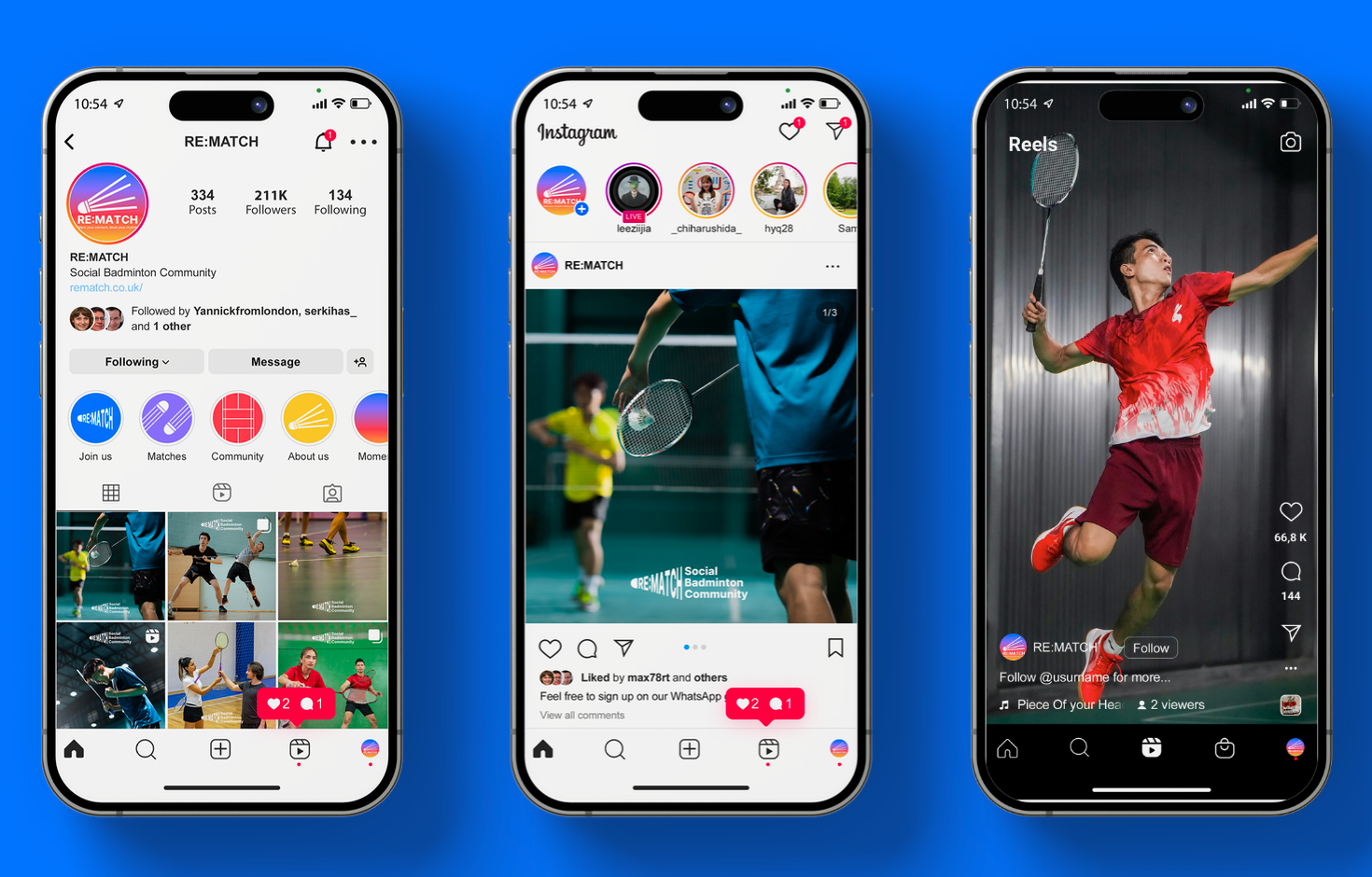
Social Media
Social media functions as a low-barrier entry point and an extension of the community’s rhythm online.
By focusing on moments of play rather than outcomes, it enables observation, recognition, and participation before physical attendance.